PreparedAlready.com

CONTINUITY
Business - Community - Family

When Disaster Strikes (And Believe Me, It Will)
Computers have changed the face of every day life and how we do business forever in so many positive ways. Even so, when it comes to computers, the one thing that is certain is that they are vunerable to all kinds of mishaps and disasters. You don't need a Hurricane Katrina type disaster to be ruined by the loss of your computer data. Let's face it, you depend on your computer systems in more ways that you'd like to admit. Can you imagine doing your job today without an internet connection?
I think most people if asked would choose their computer and internet connection over their cell phone and even over their television sets. Our computers are that important to us!
Do You Have A Data Center Disaster Recovery Plan In Place?
So what would happen to your life or your business if suddenly, and unexpectedly, you lost all of your precious computer data?
What if you had no contact information for your customers or clients, no records of your business transactions, no financial records, no files, no forms? Would your business be able to function, and if so, how long would you truly be down before your were back to business as usual?
Despite the importance of our computers and precious data that they hold for us, the reality is that most businesses and individuals do not have ANY backup system or plan in place! Logically, we all understand the importance of having a computer backup system in place, yet the overwhelming majority of us have inadequate backup systems or worse, no computer backup system at all!
Can Your Business Afford to NOT Have A Data Center Disaster Recovery Plan
We should never think of a data center disaster recovery plan as something that we don't need or something that can wait. This plan isn't something that you should consider when you have enough time, when you earn enough money, or when it's convenient for you; it should be something you HAVE NOW. Period.
Far too many companies make the mistake of thinking a disaster can't happen to them, and many have already paid dearly for this attitude. They don't look at data center disaster recovery plans as a priority. They would rather busy themselves with "real" problems that they face now, not with some "what if" scenario that might never happen at all. And it's understandable too. We all get busy with day to day demands like business proposals, meetings, and deadlines.
But the truth of the matter is that the time to implement a data center disaster recovery plan is now, BEFORE DISASTER STRIKES. And ask anyone whose gone through a disaster and they'll tell you...disasters can occur at any given time - there's just no telling when a disaster may strike or a when a serious problem may occur. Okay, so maybe the odds are in your favor, but that's little solace if you happen to be unlucky enough to find your firm the victim of an isolated calamity that claims all of your invaluable business data and intellectual capital.
Why would you want to leave the success of your business up to chance? Yet, without a sound plan that is exactly what you are doing by failing to give your data center disaster recovery plan the highest priority. There is a real need to prepare for disaster, great and small, despite it being a "what if" scenario, even if the only reason is that there is a minimal chance for that scenario to manifest itself (it's not, though).
It's Not A Question of If It Will Happen, It's When...
And of course, the "when" is when you least expect it and when you can least afford for it to happen. Even if the worst doesn't come, there are still several perks to having a data recovery plan, due in no small part to the many features a reliable computer backup system has to offer. Data security, orderly documentation, and file restoration are among the many services of a quality computer backup system. A sound data center disaster recovery plan ensures that the quality and efficiency of your business will not suffer as a result of lost or damaged files and programs.
If you're concerned with the time and money committing to implementing a data center disaster recovery plan, you can rest easy knowing that choosing the right computer backup system can return your investment many times over should disaster strike. Not only will it give you the assurance that your business can survive a catastrophe, it can actually save you money in the long run by quickly addressing any minor data management problems that may come up, keeping your business running smoothly and efficiently. That's a small investment to make for the peace of mind and security that a proper data center disaster recovery system provides.
The attitude that an adequate data center disaster recovery plan is something that your business can put is truly a recipe for disaster.
In the world of computers, disasters can (and will) happen. It's not a question of "if", it is a question of "when". Will you be prepared?
If your business relies on data, you need a data center disaster recovery plan. Set up your data center disaster recovery plan today!
















Innovative Technologies That Enhance
Community Disaster Preparedness
Innovative technologies are transforming community disaster preparedness by improving prediction, communication, and response capabilities. These tools, which range from artificial intelligence (AI) to smart sensors, can reduce the time required to make accurate forecasts and streamline the allocation of resources.
For prediction and early warning
Artificial intelligence (AI) and machine learning (ML): AI and ML algorithms analyze massive datasets from weather patterns, seismic sensors, and historical records to create predictive models that forecast natural hazards like severe storms, wildfires, and floods with greater accuracy and longer lead times. For example, Google used ML to predict flood risks in India, saving thousands of lives.
Internet of Things (IoT) sensors: Networks of interconnected sensors and devices deployed in disaster-prone areas provide real-time data for early detection. IoT sensors can monitor rising water levels, seismic activity, or hazardous gas leaks, giving communities critical time to respond.
Geographic information systems (GIS): GIS and mapping technologies integrate real-time data from various sources onto a single map. This gives emergency responders a holistic view of the situation, showing population density, affected areas, and critical infrastructure to inform evacuation and resource strategies.
For communication and information
Mobile applications: Direct communication between the public and emergency services is possible with mobile apps. Apps like those from the American Red Cross can send customizable weather alerts, safety tips, and have an "I'm Safe" option.
Social media and crowdsourcing: Platforms like X (Twitter) and Facebook enable real-time information exchange and situational awareness. Community members can post updates, photos, and videos, which helps responders identify urgent needs. However, it is important to manage potential misinformation.
Purpose-built software: Emergency management software like Veoci and Perimeter provides command centers with real-time dashboards for situational awareness and coordinated response. These platforms streamline communication and help agencies manage workflows and resources.
For response and recovery
Drones and unmanned aerial vehicles (UAVs): Equipped with high-resolution cameras and thermal sensors, drones can survey disaster areas to assess damage, locate individuals, and deliver supplies when ground access is blocked. A California drone program reduced 911 response times by 50%.
Blockchain technology: This can be used for supply chain management in disaster relief to ensure transparency, security, and traceability. Blockchain-based platforms, like the Kare Survivor Wallet, can securely distribute aid funds, reducing administrative delays.
Advanced robotics: Beyond drones, ground-based robots can perform tasks in hazardous environments, such as searching collapsed structures or handling hazardous materials.
Virtual and augmented reality (VR/AR): VR and AR technologies can simulate emergency scenarios for training first responders. During a crisis, AR tools can overlay real-time data, such as infrastructure maps and hazard zones, to enhance situational awareness.
Artificial Intelligence Uses For
Predicting Different Natural Disasters
Google's global flood forecasting initiative
Google AI has developed predictive models that forecast riverine floods up to seven days in advance, a significant improvement over traditional hydrological models.
Data sources: The system uses two AI models that process publicly available data, including precipitation, water levels from gauges, and weather forecasts.
Inundation modeling: One model forecasts streamflow, while a second "inundation model" simulates how floodwater will spread across floodplains using satellite imagery and historical data. This shows authorities the exact areas that will be affected and how high the water is expected to rise.
Impact: It has been implemented in over 80 countries, providing real-time forecasts for over 460 million people in flood-prone regions, particularly in developing countries with scarce data.
Alerts are distributed through Google Search, Maps, and Android notifications.
AI for ungauged rivers
To address forecasting gaps in areas without stream gauges, researchers have trained an AI model on data from over 5,600 existing gauges.
Performance: The model provided reliable seven-day flood predictions in ungauged areas that were as accurate as—or better than—current systems' one-day predictions.
Applications: This technology helps close data gaps in many regions, providing reliable flood forecasts for developing areas where traditional methods struggle.
Hurricane and severe storm forecasting
Google DeepMind and NOAA collaboration
In partnership with the National Hurricane Center (NHC), Google is providing AI tropical cyclone forecasts to improve track and intensity predictions.
Speed and accuracy: AI-powered models can be thousands of times faster than traditional physics-based models while creating finer-grained predictions.
Forecaster support: These models act as a "second opinion" for human forecasters, providing an additional, and sometimes more accurate, tool for predicting storm movement.
Refining predictions: AI is being trained to address a key forecasting challenge: the rapid intensification of hurricanes. A PNNL model reduced intensity prediction errors by up to 22% by detecting relationships between storm behavior and climate factors.
Wildfire prediction
ECMWF's machine learning model
A machine learning model from the European Centre for Medium-Range Weather Forecasts (ECMWF) integrates weather, fuel, and ignition data to predict where wildfires are most likely to occur.
Increased precision: Instead of just predicting fire danger, the model pinpoints specific, high-risk locations.
Resource allocation: This allows fire prevention agencies to more accurately allocate resources. The model can also account for fuel availability, such as dry vegetation caused by preceding wet and dry weather patterns.
NASA uses AI and deep learning to predict the potential for wildfires by tracking factors like vegetation and climate change over decades. This long-range perspective can help identify high-risk regions years in advance.
Earthquake and tsunami forecasting
University of Texas earthquake forecasting trial
Researchers developed an AI algorithm that, during a seven-month trial in China, correctly predicted 70% of earthquakes one week before they occurred.
Data analysis: The AI was trained on five years of seismic recordings to identify subtle patterns and tremors that often precede an earthquake.
Complementary tool: While not yet a standalone prediction system, this AI offers a promising tool for early warning systems and long-term risk assessment.
AI-enhanced tsunami early warning
UCLA and Cardiff University researchers have developed a system using advanced acoustic technology and AI to quickly assess tsunami risk.
Acoustic analysis: The AI-powered system analyzes acoustic-gravity waves, which travel faster than tsunamis and contain information about the earthquake's magnitude and slip type. This helps determine if a tsunami is likely to form.
Reduced false alarms: The analysis helps to reduce false alarms by distinguishing between earthquakes likely to cause tsunamis and those that won't, improving warning reliability.
Landslide prediction
UCLA's AI prediction model
A new technique from UCLA geologists uses an AI program to predict where and why landslides might occur.
Accurate and interpretable: The AI identifies key variables and quantifies their contributions to landslide susceptibility,
improving prediction accuracy and interpretability compared to traditional models.
Adaptable and efficient: The model is efficient and requires less computing power, allowing for broader application in high-risk areas like the Himalayas.
AI for landslide mapping
After a magnitude 7.4 earthquake in Taiwan, an AI-driven method was used to rapidly map over 7,000 landslides within three hours of satellite imagery being acquired. It combines optical imagery with cloud-penetrating radar data to detect landslides in large and inaccessible areas.
Community Continuity Planning
A disaster community continuity plan enables a community to continue its essential functions, provide critical services, and effectively recover from a wide range of potential emergencies. Unlike standard disaster recovery, which focuses on rebuilding after an event, continuity planning is a proactive effort that ensures critical services are sustained with minimal interruption during and after a disaster.
This "whole community" approach involves a collaborative effort across multiple sectors, including government, the private sector, critical infrastructure, non-governmental organizations, and residents.
Steps for community continuity planning
1. Form a planning team
Create a diverse team: Include representatives from all critical community sectors, such as emergency services, local government, businesses, and vulnerable or at-risk populations.
Establish leadership and authority: Clearly define the roles and responsibilities for managing the planning process and activating the plan during an emergency.
2. Identify risks and essential functions
Conduct a risk assessment: Identify the natural, human-made, and technological hazards your community is most vulnerable to.
Review the history of past disasters and potential future threats.
Assess vulnerabilities: Map out vulnerable areas and populations, and take an inventory of available community resources and tools.
Identify essential functions: Determine which functions and services are absolutely critical for the community to maintain during and after a disaster. Examples include:
Emergency services
Healthcare
Communications
Food and water distribution
Governmental functions
3. Develop continuity strategies
Establish continuity of government (COG) procedures: Define a pre-defined line of succession for leadership and delegate authority in case primary officials are incapacitated.
Plan for facilities and infrastructure: Designate alternative operating sites or virtual offices. This should also include protocols for restoring or replacing damaged infrastructure and essential records.
Create communication strategies: Establish redundant communication systems to ensure connectivity between leadership, responders, and the public. Prepare to communicate with vulnerable populations and share critical information.
4. Prepare for the recovery phase
Pre-disaster recovery planning: Develop a recovery framework before a disaster strikes. This will create a more organized and resilient post-disaster rebuilding process.
Integrate plans: Ensure the continuity plan is integrated with other community documents, such as comprehensive plans, hazard mitigation plans, and capital improvement plans.
Secure funding sources: Identify potential financial resources in advance to aid in a swifter recovery.
5. Test, train, and exercise the plan
Validate the plan: Conduct regular tests, training, and exercises to assess and validate the effectiveness of the continuity plan.
Conduct drills: Use methods like tabletop exercises and mock drills to simulate disaster scenarios. This helps staff and community members understand their roles and responsibilities.
Incorporate feedback: Use the results of exercises and real-world incidents to identify areas for improvement and update the plan.
6. Maintain and update the plan
Regular reviews: Continuity planning is an ongoing process. Designate staff to routinely review and update the plan to ensure its details remain relevant.
Keep resources current: The plan should account for changes in available resources, technology, and community risks.


Community Disaster Resources Overview
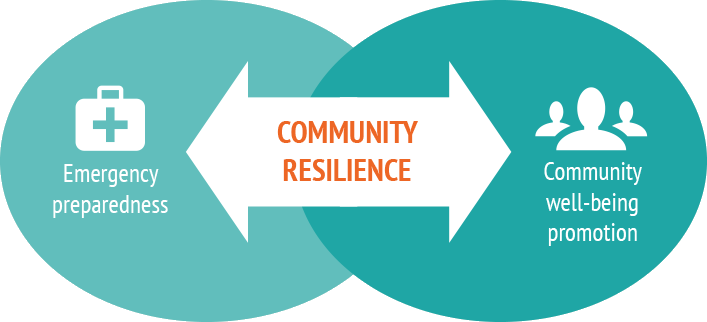
Community resilience is the sustained ability of a community to use its resources to prepare for, withstand, and recover from adverse events like natural disasters, economic downturns, and public health emergencies. It is a proactive, multifaceted approach that involves developing strong social networks, robust infrastructure, and adaptive capacities to reduce a community's vulnerability to shocks and disturbances.
Core components of community resilience
Based on a systematic review of the literature, core elements of a resilient community include:
Social connections and relationships: Strong, trusting relationships and networks among community members provide critical support and enable collective action during crises.
Local knowledge: Communities that understand their unique risks and have historical knowledge of past disasters are better equipped to respond effectively.
Communication: Effective systems for communication and the rapid flow of information—both daily and during a crisis—are essential for coordinating a response.
Physical and mental health: Optimal community health and access to quality healthcare are vital for withstanding and recovering from major disruptions.
Governance and leadership: Strong, inclusive leadership and effective public involvement in strategic planning, response, and recovery help guide communities through emergencies.
Resources: Access to a variety of resources, including tangible supplies like food and water, as well as social, financial, and institutional resources, is crucial.
Economic investment: Diverse and stable local economies and proactive investment help communities absorb economic shocks and recover more quickly.
Preparedness: Robust emergency management systems and concrete plans for prevention, mitigation, response, and recovery are key.
Mental outlook: A community's collective attitude, including its hope and adaptability, can significantly shape its ability to cope with and learn from adversity.
Strategies for building community resilience
Building resilience is a long-term process that involves a collective effort from all community sectors. Key strategies include:
Increase social connectedness: Promote opportunities for residents to connect and build trust through community events, volunteer programs, and civic activities.
Engage vulnerable populations: Involve high-risk individuals and the programs that serve them in preparedness and planning efforts to ensure equitable and effective support.
Strengthen infrastructure and services: Invest in and improve essential systems, including healthcare, social services, and physical infrastructure like transportation and communication.
Expand communication and collaboration: Establish broad networks that include businesses, community organizations, faith-based groups, and residents in addition to traditional emergency management partners.
Promote health and wellness: Combine public health interventions with disaster preparedness education to improve the overall physical and psychological health of the population.
Foster local economic diversity: Support diverse local industries and businesses to strengthen the economy and make it less susceptible to shocks.
Enhance individual preparedness: Encourage residents to create family emergency plans, assemble disaster kits, and participate in training like first aid or CERT (Community Emergency Response Team).
Assess and monitor progress: Regularly assess the community's assets and vulnerabilities to measure and track its resilience over time and make necessary adjustments to plans.

Business Continuity Plan
A business continuity plan (BCP) is a proactive strategy to maintain essential business functions during and after a significant disruption, such as a natural disaster, cyberattack, or power outage. A BCP ensures that critical operations, data, and personnel are protected, allowing for a swift and orderly recovery.
Key steps to create a business continuity plan
Conduct a business impact analysis (BIA): Identify and prioritize the most critical business functions that must continue during a disruption. The BIA should quantify the operational and financial impact of losing these functions and determine key recovery metrics:
Recovery Time Objective (RTO): The maximum acceptable time for a system or process to be unavailable.
Recovery Point Objective (RPO): The maximum amount of data loss that is tolerable.
Assess risks and vulnerabilities: Evaluate the potential threats that could cause a disruption, such as natural disasters, cyberattacks, equipment failures, or supply chain issues. Weigh the likelihood of each event against its potential impact.
Develop recovery strategies: For each critical function and identified risk, outline specific strategies to ensure continuity. Examples include:
Alternate sites for operations if a primary location becomes inaccessible.
Backup systems and off-site data storage for IT infrastructure.
Supply chain alternatives in case a key vendor is disrupted.
Form a continuity team: Assemble a cross-functional team responsible for creating, implementing, and managing the BCP.
Clearly define roles and responsibilities so that every team member knows their specific duties during a crisis.
Create a communication plan: Establish clear communication protocols for both internal and external stakeholders. The plan should detail how to notify employees, customers, suppliers, and the public during an emergency, including backup communication methods.
Test, train, and update: A BCP is a "living document" that requires regular testing and updates to remain effective.
Testing: Conduct exercises and simulations, like tabletop walkthroughs, to identify weaknesses.
Training: Ensure all relevant employees understand their roles and responsibilities.
Updating: Review and revise the plan annually or whenever there are significant changes to the business, its technology, or personnel.
Benefits of a business continuity plan
Minimized downtime and financial loss: A BCP helps restore operations quickly, reducing revenue loss and preventing costly, prolonged disruptions.
Protected reputation: Maintaining operations and communicating clearly during a crisis helps preserve customer confidence and brand reputation.
Enhanced security: The process of creating a BCP strengthens data security by identifying vulnerabilities and implementing robust backup and recovery measures.
Improved employee morale: A BCP protects employees by prioritizing their safety and providing clear guidance, which reduces anxiety and boosts morale.
Competitive advantage: A business that can adapt and continue operating during a crisis gains a strategic edge over competitors who are caught unprepared.

What Regulations Require
A Business Continuity Plan?
A business continuity plan (BCP) is not universally mandated by law, but it is a legal requirement for many industries, particularly those that handle sensitive data or provide critical services. Other organizations may be required to have a BCP due to industry standards, licensing agreements, or a duty to protect employees and customer assets.
Healthcare industry
The Health Insurance Portability and Accountability Act (HIPAA) mandates BCP compliance for healthcare organizations. This requires the development of an advanced data management plan to protect critical and sensitive patient information during disruptions.
Financial services industry
Several regulations in the financial services sector require BCPs. For instance, FINRA Rule 4370 requires member firms to maintain and review a written BCP annually and share their strategy with customers. The FFIEC Handbook indicates that directors and managers are responsible for contingency planning, while CFTC rules necessitate written BCPs for certain swap entities to quickly resume operations after disruptions. The EFA Act mandates BCPs for federally chartered institutions to ensure customer funds are available during a crisis.
Government organizations
Federal and state government entities must have COOP and BCPs to maintain essential services during crises. FISMA requires contingency planning as part of federal government information security guidelines. Further guidance is provided by NIST Special Publication 800-34.
Other key requirements
Beyond specific industries, other regulations and standards require BCPs, such as OSHA's requirement for Emergency Action Plans, which are part of a BCP and include evacuation procedures. The GDPR requires protecting personal data, and a BCP assists with responding to data breaches. Companies handling credit card information must comply with PCI DSS, for which a BCP is crucial.
Florida-specific requirements
In Florida, state data centers are mandated to develop and implement BCPs and conduct annual exercises. State workplace safety standards, informed by OSHA, also require documented emergency and evacuation procedures. Additional details on business continuity compliance requirements can be found at ConnectWise.

Family Continuity Strategies
Family continuity strategies involve a holistic approach to preserve a family's well-being, values, and assets across generations, often including succession and emergency planning. These plans protect against future disruptions by promoting good communication, preparing for crises, and managing business and financial transitions.
Communication and emotional wellness strategies
Building a resilient family unit and fostering an open, supportive environment is a key aspect of family continuity.
Encourage open dialogue. Create a safe, judgment-free space where all members feel comfortable sharing their thoughts and feelings. Scheduling regular, dedicated family time without digital distractions can help everyone stay connected.
Promote active listening. Practice attentive listening by facing the speaker, making eye contact, and paraphrasing what you've heard to show you understand. This validates a family member's feelings and helps avoid misunderstandings.
Resolve conflicts constructively. Teach family members to use "I" statements, like "I feel sad when...", rather than accusatory "you" statements. This helps focus on the problem at hand instead of blaming people, which can make others defensive.
Establish shared values and traditions. Discuss and reinforce the values that are important to your family. Establishing and maintaining traditions, from holidays to regular family game nights, provides a strong sense of identity, purpose, and unity.
Connect with distant relatives. Utilize technology like phone calls and video chats to stay in touch with extended family members who live far away. This helps everyone feel more connected.
Crisis and emergency preparedness
A family continuity of operations plan details what to do during an emergency to minimize disruption and stress.
Create a communication plan. Establish how and where family members will contact one another if separated, such as after a sudden fire or during a power outage. Designate an out-of-state friend or relative as a central point of contact.
Plan for different emergencies. Determine what your family will do in various scenarios, from a sudden evacuation to a long-term shelter-in-place order. This includes having a plan for children's school or work shutdowns and arranging for alternative childcare.
Create a family contingency binder. Organize all vital information in one accessible place. This binder should include important phone numbers, insurance policies, and legal documents like living wills and powers of attorney.
Compile emergency supplies. Keep a kit with essentials for at least a few days. This should include water, non-perishable food, flashlights, first-aid supplies, and any necessary medications.
Practice drills. Run through your emergency plans every six months. This helps everyone, including children and older family members, know what to do and where to go in a crisis.
Financial planning for long-term security
Securing your family's financial future involves budgeting, investing, and estate planning to build generational wealth.
Set financial goals. Start by defining your family's long-term financial ambitions, such as saving for retirement, buying a home, or funding a child's education. Use these goals to guide your financial planning.
Create a budget. Track all sources of income and expenses to understand your cash flow. This allows you to prioritize spending and allocate money toward savings and investments.
Build an emergency fund. Set aside at least three to six months' worth of living expenses in an easily accessible, high-yield savings account. This fund protects your family against unexpected expenses or job loss.
Invest for the future. Consider investing in retirement accounts like 401(k)s and IRAs, as well as education savings accounts like 529 plans. Diversify your investments across various assets to minimize risk.
Teach financial literacy. Involve children in financial discussions and teach them about saving and budgeting from a young age. Give hands-on experiences like managing a savings account or budgeting for family trips.
Business succession and legacy planning
For families with businesses or significant assets, formal planning is crucial for a smooth transfer of ownership and management.
Create a succession plan. Start early by outlining the timeline for transferring leadership. Identify and develop potential successors based on their skills and desire to lead, not just their family status.
Implement family governance. Establish clear guidelines for decision-making, roles, and responsibilities. This can take the form of a family constitution or council to manage both family and business issues.
Involve all family members. Keep everyone informed through transparent communication. Even those not involved in the business should understand the plan, as they may become shareholders.
Plan for contingencies. Develop a plan for unexpected events, such as the sudden death or illness of a key family member. This ensures the business can remain stable during a difficult transition.
Work with professionals. Engage legal and financial advisors to assist with the complex legal, financial, and tax implications of transferring ownership and assets.

Common Challenges For
Families Creating Continuity Plans
Challenges often arise from the emotional and psychological complexities of intertwining family and business relationships. These issues, combined with poor communication and lack of planning, often make continuity difficult to achieve.
Communication and emotional hurdles
Reluctance to discuss difficult topics: Families often avoid talking about sensitive subjects like illness, death, and money, fearing that doing so could cause conflict or hurt feelings. This procrastination means that plans are not developed until a crisis forces the issue, often when emotions are running high.
Unresolved conflicts: Long-standing sibling rivalries, perceived parental favoritism, and differences in work ethic can resurface during planning, causing significant conflict. Without a structured process for resolution, these personal conflicts can damage both the family and the business.
Founder's reluctance to let go: Many founders or first-generation owners have a strong emotional attachment to the business and struggle to relinquish control. The business is seen as an extension of their identity, and they may fear losing their purpose or status by stepping aside.
Successor's fear of obligation: The next generation can feel an immense burden of obligation to take over the family business, even if it doesn't align with their personal ambitions. This can lead to resentment and a lack of true engagement, which is detrimental to the business's future.
Business and financial challenges
No clear successor identification: Without a formal succession plan, families often default to assumptions about who will take over, such as assuming the eldest child will lead. This can overlook more qualified candidates (both family and non-family), leading to resentment and business instability.
Balancing fairness and competence: Families often face a conflict between giving ownership or leadership to a child out of a desire for "fairness" (e.g., distributing assets equally) and choosing a successor based on who is most competent for the job. Emotional decisions can override objective business interests.
Inadequate preparation for successors: Identifying a successor is only one part of the plan; preparing them is another. Many families fail to provide formal mentorship, training, and real-world experience, leaving the next generation ill-equipped to lead.
Neglecting professional governance: Without clear governance structures, decision-making roles between family members, owners, and business executives can become muddled. This confusion can intensify conflicts and hinder effective management.
Focusing solely on ownership: Some families focus exclusively on transferring ownership, ignoring the critical parallel process of transitioning leadership, culture, and operational responsibilities.
Lack of structured process
Procrastination: Family businesses are often busy with daily operations and put off long-term strategic planning. This delay can lead to rushed and reactive decisions during a crisis, instead of thoughtful, proactive ones.
Inadequate documentation: A continuity plan is ineffective if not formalized and documented. Without a written plan, family members can have different interpretations of what was agreed upon, leading to confusion and disputes down the line.
Ignoring external help: Families may try to navigate these complex issues on their own, often without the necessary expertise in law, finance, and conflict resolution. Engaging a neutral, third-party advisor can help facilitate discussions and provide an impartial perspective.